I used to think a toy had to do something. Light up. Make a noise. Perform a trick. But it turns out, the best toys might be the quiet ones that do absolutely nothing on their own. That’s exactly what makes minifigs so powerful for kids. They don’t come with rules. They don’t follow a script. They just…exist. And kids take it from there.
You hand a child a minifig, and instantly, something clicks. That little figure becomes a pirate, a chef, a hero, a villain, a lost traveler, a time-traveling librarian. It doesn’t really matter. What matters is that it starts something. A conversation. A story. A whole world.
Why Open-Ended Play Matters
Kids don’t just play for fun. Play is how they figure out how the world works. When play is open-ended, meaning there’s no right or wrong way to do it, something special happens. Kids start making decisions on their own. They create rules, build social stories, solve pretend problems, and express emotions they might not know how to say out loud.
You don’t need a thousand pieces. One small figure can be enough. It gives the child a character to project thoughts onto. And that’s a big deal.
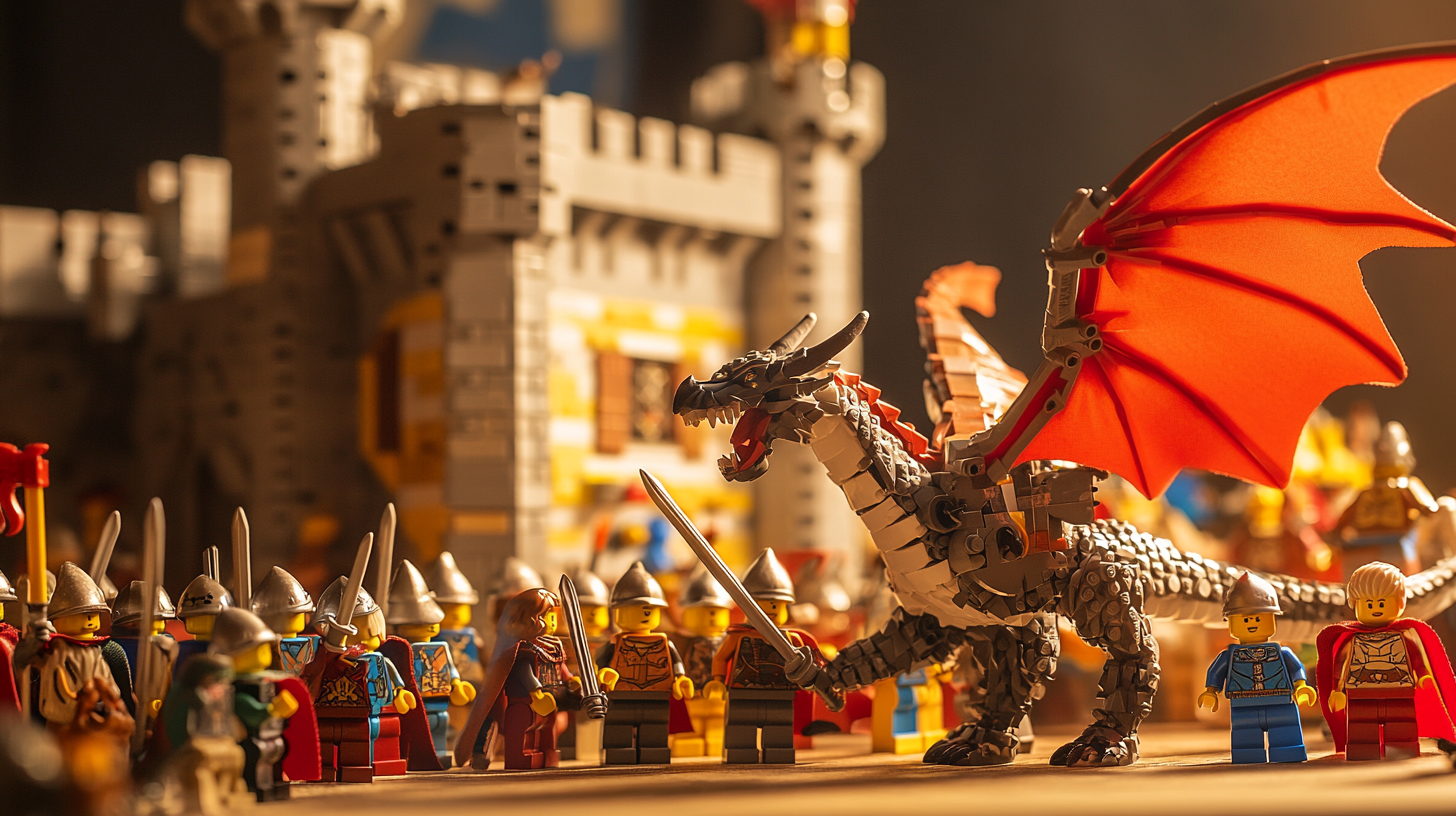
Minifigs hit the sweet spot for this kind of play. They’re small, easy to hold, and come in endless styles. Some are clearly knights or astronauts. Others are just kind of weird. But that’s good. The weirder ones get even more attention. Kids don’t ask, “What is this?” They ask, “What could this be?”
How Kids Use Minifigs to Tell Stories
I’ve watched my niece build a town out of books and couch cushions. Every pillow is a mountain. Every blanket is a river. And at the center of it all is a minifig named Barry who’s apparently trying to find his long-lost lizard friend before a storm hits. I don’t know where that came from. But she does. She’s making it up as she goes. And it’s perfect.
These stories don’t need adult logic. A firefighter can turn into a space captain mid-sentence. A dog can fly. Time travel is just a choice, not a science. The whole point is to keep the story going. When a child builds a story around a minifig, they’re not just playing. They’re learning how to lead. How to adapt. How to feel.
They try on emotions. Fear. Bravery. Anger. Excitement. They experiment with voices and dialogue. They learn how to give characters motivation and how to imagine consequences. This is story structure in disguise. It’s also social development. Empathy. Problem-solving. Emotional control.
There’s no workbook or app that teaches all that in one go. But a few minifigs and a little time can get them pretty far.
A Tool for Independent Play
You don’t always need to be there to guide the play. In fact, it’s often better if you’re not. When kids play with minifigs on their own, they’re not just entertained. They’re self-regulating. They’re creating structure without being told to.
That kind of solo, focused play builds patience and confidence. It gives their brains space to roam, without pressure or screens. Even ten minutes of this kind of play can help reset a cranky mood or calm a restless day.
And honestly, it helps the grown-ups too. I keep a few minifigs in a small tray near my desk. I’m not ashamed. If I need to step away from work for a minute and reset my brain, it helps. I’ll arrange them, swap a head or a hat, build a quick scene. It’s simple. But it works.
I’ve seen minifigs in therapy offices for the same reason. They’re a low-pressure way to get kids talking, even if the talking is through a tiny wizard with a plastic beard.
If you’re curious where to find them, minifig.biz seems to have all of the weird minifigs you can’t get elsewhere. Just the good stuff. No nonsense.
Not Just for Kids
A lot of adults still collect minifigs. Some build display shelves. Others use them in board games, photos, or even on cakes. But most people just like the idea of having something small and personal to fiddle with.
And there’s a reason adults still connect with them. Minifigs are familiar but full of possibility. They remind us that creativity doesn’t need to be complicated.
For kids, though, they’re a creative anchor. Something to build around. You don’t need a full playset or matching parts. In fact, it’s often better when the pieces don’t match. The mix-and-match chaos leads to better stories.
One minifig with a sword, one with a briefcase, one with a frog hat? Now that’s a team. What’s their mission? No idea yet. But something’s going to happen.
Why Teachers and Parents Keep Using Them
Minifigs aren’t loud. They don’t need batteries. They don’t update or break easily. That alone makes them useful in a classroom or living room. But there’s more.
Teachers use them to help kids retell stories from books. Or to act out new endings. They help with sequencing, collaboration, and vocabulary. Some parents use them to talk through tough situations. Like how to handle a fight with a friend. Or how to try something scary.
When you give the child a figure and ask, “What do you think this one would do?” the answers often tell you a lot more than a direct question ever could.
How to Keep It Interesting
If you want to get more value out of minifigs, try rotating them. Keep a few out, then swap them with others every week or so. The novelty helps. You don’t need to buy tons. Just change the combinations.
Give your kids a container and let them mix and match themselves. No rules. Maybe set up a tiny “minifig hospital” where they fix broken arms or make new characters. Or give them a prompt like: “This minifig has lost their voice. What happens next?”
These aren’t hard activities. You don’t need special gear. Just curiosity and a few small figures. And the space to let things get a little weird.
Final Thought
I don’t think kids need more stuff. But I do think they need better stuff. Things that don’t tell them what to do but invite them to figure it out for themselves. That’s what minifigs do best. They’re blank slates with just enough personality to start something. What happens next is up to the kid.
I get mine from minifig.biz. They’re always adding new ones, and half the fun is just seeing what’s out there.
So yeah. Small figures. Big stories. That’s how it works.
